Ezo

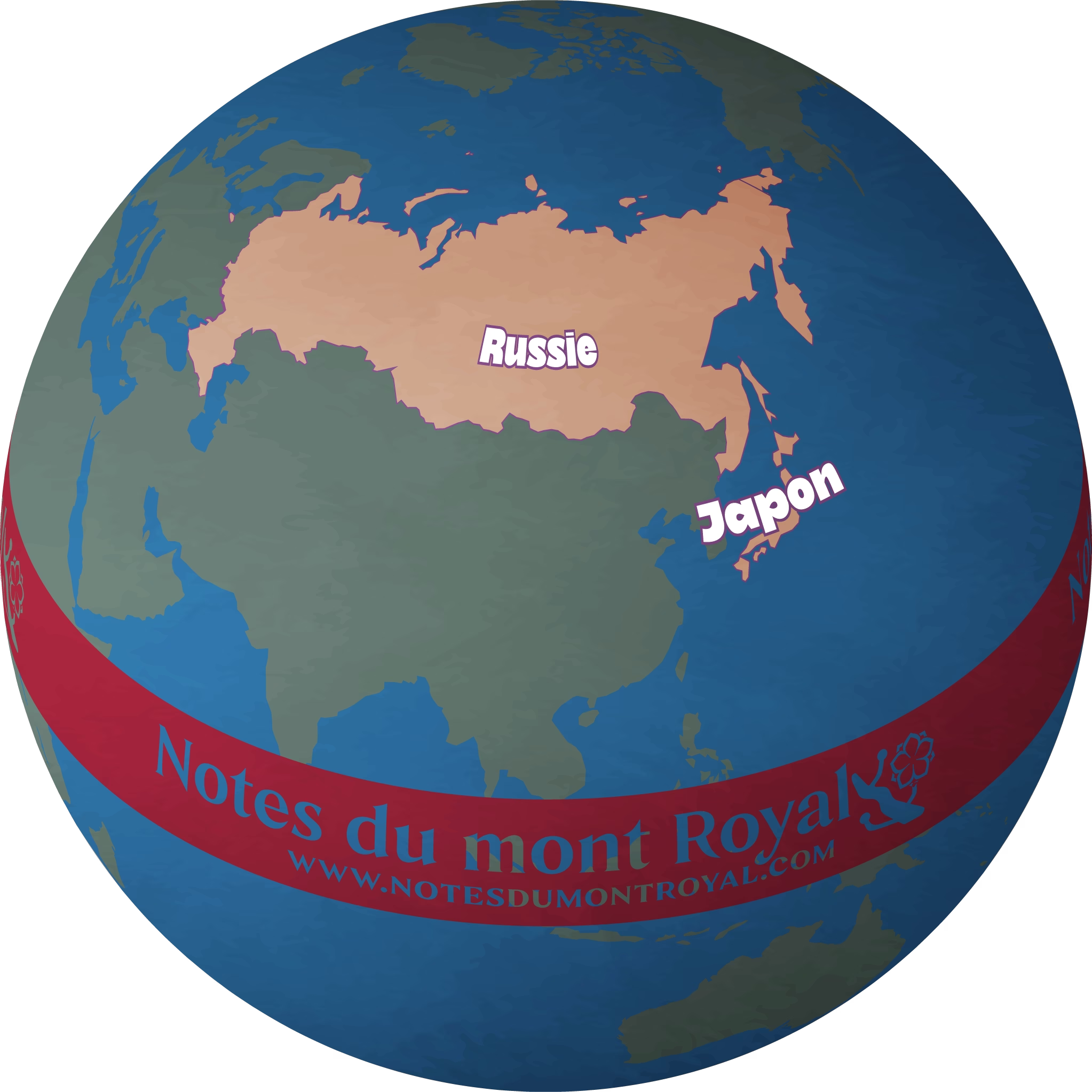
Mappemonde mettant en évidence le Japon et la Russie.

El Réquiem del pueblo ainu

Tra­ducido del fran­cés

A se­mejanza de las na­cio­nes ame­rin­dias, lo que queda hoy del pueblo ai­nu, an­taño tan no­ta­ble y tan ar­dien­te­mente amante de la liber­tad, se ve mi­se­ra­ble­mente con­fi­nado en unas cuan­tas al­deas abo­rí­genes. Se extin­gue en si­len­cio, aban­do­nado a una suerte que en modo al­guno me­re­ce. An­tes de la he­ge­mo­nía ja­po­nesa, su in­menso te­rritorio se des­ple­ga­ba, sin em­bar­go, a la ma­nera de un ár­bol majes­tuo­so. La gran isla de Hokkaidô —en­ton­ces lla­mada Ezo— cons­ti­tuía el tronco ma­ci­zo, del cual se lan­za­ban dos ra­mas dis­tin­tas. Una, in­cli­nada ha­cia el no­roes­te, no era otra que la isla de Saja­lín —Kita-Ezo o «Ezo del Nor­te»—; la ot­ra, ha­cia el no­res­te, dibujaba el rosa­rio de las Kuri­les —Oku-Ezo o «Ezo de los con­fi­nes»— des­gra­nado hasta la punta de Ka­m­cha­tka.

En los confines del mundo conocido

Du­rante cerca de un mi­le­nio, el Japón no tuvo no­ción se­ria al­guna de es­tas is­las ocul­tas bajo las brumas mito­lógi­cas. Lo poco que de ellas sa­bía le lle­gaba a través de sin­gula­res mer­can­cías que re­cibía me­diante el true­que —a­ceite de tiburón, plumas de águi­la, liquen me­di­ci­nal, ext­ra­ñas ves­ti­men­tas co­si­das con cor­teza en ve­ra­no, con pieles de foca en in­vier­no—, o de rumo­res leja­nos, poco fia­bles, que des­cribían a los jefes in­sula­res como gigan­tes «muy mal­va­dos y da­dos a la magia», capa­ces, a vo­lun­tad, de «producir la lluvia y ha­cer so­plar las tem­pes­ta­des»1Matsumae-shi (Des­crip­ción de Ma­tsumae) de Ma­tsumae Hi­ro­naga, 1781, inédito en fran­cés.. No fue sino hasta 1604 cuando un daimio fue in­ves­tido en Ma­tsumae; pero este se con­for­ma­ba, en cierto mo­do, con mon­tar guar­dia.

«Des­deña­bles y des­deña­das», es­tas is­las fue­ron asimismo la única parte del Pa­cífico que es­capó a la ac­ti­vi­dad in­fa­ti­ga­ble del capitán Cook. Y a ese tí­tulo, des­per­ta­ron la curio­si­dad de La Pé­rou­se, quien, desde su par­tida de Fran­cia, ar­día de im­pa­cien­cia por ser el pri­mero en abor­dar­las. En 1787, las fraga­tas bajo su mando fon­dea­ron ante Saja­lín, y los fran­ce­s­es, des­em­bar­ca­dos en tie­rra, en­tra­ron en con­tacto con «una raza de hom­bres dife­rente de la de los ja­po­nes­es, los chi­nos, los ka­m­cha­da­les y los tár­ta­ros, de quie­nes no es­tán sepa­ra­dos más que por un ca­nal». Sub­yugado tanto por sus ma­ne­ras dul­ces y es­pon­tá­neas como por su rara in­teli­gen­cia, La Pé­rouse no va­ciló en com­pa­rar­los con los euro­peos más ins­trui­dos. Cuenta con ma­ravi­lla cómo un is­leño, com­pren­diendo sus pe­ti­cio­nes, tomó un lápiz para tra­zar so­bre el papel un mapa rigurosa­mente exacto e in­di­car «me­diante tra­zos, el nú­mero de jor­na­das de pi­ragua».

Llegó la res­taura­ción de Mei­ji, que ha­bría de tras­tor­nar los equi­librios se­cula­res de Ezo, acaso más aún que los del pro­pio Japón. Al hilo de una po­lítica brutal de rotura­ción y co­lo­niza­ción, agravada por des­po­se­sio­nes autorita­rias, la ad­mi­nis­tra­ción cen­tral so­me­tió a los ai­nus a una tutela de ma­dras­tra que bo­rraba hasta el nom­bre de su tie­rra. En esa mar­gi­na­ción for­za­da, su rica lite­ra­tura oral, trans­mitida de ge­ne­ra­ción en ge­ne­ra­ción en el san­tua­rio de su me­mo­ria, se mar­chitó hasta no ser más que re­cuer­dos de abue­los. Ol­vi­da­dos los can­tos con­sa­gra­dos a los ante­pa­sa­dos (ainu-yukar)2De la prác­tica de es­tos rela­tos ver­sifi­ca­dos (yukar), solo ra­ros tes­ti­mo­nios han lle­gado hasta no­so­t­ros: «Si he­mos de creer un dibujo ja­po­nés del siglo XVII, el re­cita­dor (yukar-kur) pa­rece ha­ber sal­mo­diado origi­nal­mente su texto ten­dido junto al hogar, mar­cando el com­pás gol­peán­dose el vien­tre. Los úl­ti­mos tes­ti­mo­nios […] mues­tran al re­cita­dor, en rea­li­dad casi siem­pre una mujer, sen­tada con las pier­nas cruza­das al borde del hogar y mar­cando el com­pás gol­peando el borde del fogón con una va­ri­lla. Los oyen­tes ha­cen lo mismo profi­riendo re­gular­mente gritos de acom­pa­ña­miento»., las epo­peyas divi­nas (kamuy-yukar) y los cuen­tos (uwepeker) en los que co­braba vida una na­tura­leza vaga­mente per­so­nifi­ca­da: el Mar que nut­re, el Bos­que que co­bi­ja, el Osezno criado en la al­dea con es­mero in­fi­nito… Tal como lo dep­lora Ku­bo­dera It­suhiko: «Salvo unos po­cos an­cia­nos, los ai­nus ya no em­plean su len­gua. Ha­blan ja­po­nés».

El Fervor sacrificial de Chiri Yukie

Para con­jurar esa suerte sur­gió Chiri Yukie. Des­ga­rrada en­tre su educa­ción ja­po­nesa mo­derna y la he­ren­cia de sus abue­las, re­cita­do­ras ilus­tres, sa­bién­dose con­de­nada por la en­fer­me­dad, esta mujer ainu em­pleó su breví­sima exis­ten­cia en trans­cribir en la­tín y tra­ducir al ja­po­nés trece epo­peyas divi­nas, con­vir­tién­dose en la «joven que cap­turaba a los dio­ses» en «re­galo para los suyos»3Para re­tomar la be­lla fór­mula del in­ves­ti­ga­dor Mar­vin Nauen­dor­ff.. Su co­ra­zón dejó de la­tir a los die­ci­nueve años, ape­nas unas horas des­pués de con­cluir su ma­nus­crito Ainu shi­n’yô-shû (Co­lec­ción de can­tos ai­nus)4For­mas re­cha­za­das:
Chants des dieux aï­nous (Can­tos de los dio­ses ai­nus).
Mytho­logie ainu (Mito­logía ainu).
Ainu shi­n’yoos­huu.
Ainu shin­youshu.
. Su tía, Imekanu5For­mas re­cha­za­das:
Imekano.
Kan­nari Ma­tsu.
, y su her­ma­no, Chiri Mas­hi­ho, re­toma­ron luego la an­tor­cha, pu­bli­cando im­po­nen­tes con­ti­nua­cio­nes. En su prefa­cio con acen­tos de tes­ta­men­to, Chiri Yukie en­tona el treno de «los con­de­na­dos a des­apa­re­cer» (horobiyuku mono):

«¿A­dónde se fue­ron to­das aque­llas gen­tes que vivían en paz en las mon­ta­ñas y en las lla­nuras? La na­tura­leza que exis­tía desde los tiem­pos an­ti­guos des­apa­rece progre­siva­men­te. Los po­cos de no­so­t­ros que aún que­da­mos abri­mos gran­des ojos asom­bra­dos ante la evo­lución del mun­do. […] ¡Oh, si­lueta las­ti­mosa en trance de pe­re­cer, obli­gada a afe­rrarse a la cle­men­cia aje­na!»

Tsus­hima, Yûko (di­r.), Tom­bent, tom­bent les gouttes d’ar­gent : Chants du peuple aï­nou (Caen, caen las gotas de pla­ta: Can­tos del pueblo ainu), trad. del ja­po­nés por Flore Co­umau, Ro­dol­phe Diot, Ca­the­rine Van­sin­te­jan, Pauline Vey y Rose-Ma­rie Maki­no-Fa­yo­lle, Pa­rís: Ga­llimard, col. «L’Aube des peup­le­s», 1996.

La Resistencia por el espíritu de Nukishio Kizô

En per­fecto contra­punto a ese elogio fú­nebre, Nukis­hio Kizô6For­mas re­cha­za­das:
Nukis­hio Hô­chin.
Nukis­hio Hômaku.
re­chaza la profe­cía de la extin­ción. A través de su ma­ni­fiesto de 1934, Ainu no dôka to senshô (Asimi­la­ción y ves­ti­gios de los ai­nus), des­pierta el or­gu­llo del nom­bre ainu que, en la len­gua de los suyos, sig­nifica «ser hu­mano». Fus­ti­gando al «hom­bre or­di­na­rio» (ningen) ce­gado por el egoís­mo, llama con to­dos sus anhelos al ad­ve­ni­miento del «hom­bre vir­tuoso» (hito, 人). En­tre­gán­dose a una exége­sis po­ética de este úl­timo ideo­gra­ma, cuyos dos tra­zos se apun­ta­lan mutua­mente para im­pe­dir su caí­da, el in­telec­tual lee en él la ale­go­ría misma de nues­tra con­di­ción: el ser hu­mano tiene «ne­ce­si­dad de un apoyo mutuo vigoroso y cons­tante para man­te­nerse en pie». Es en esa fra­ter­ni­dad ac­ti­va, erigida en vir­tud, donde vis­lum­bra la es­pe­ranza de una so­cie­dad apa­ciguada en la que «los hom­bres vir­tuo­sos res­pe­tan la po­ten­cia de la na­tura­leza».

En busca de las almas fugadas

Así como des­apa­re­ció el viejo Ezo, con es­tos ai­nus —her­ma­nos del fragor de los to­rren­tes y del la­mento del viento en­tre el fo­llaje— ame­na­zan tam­bién con bo­rrarse la «teo­fagia sil­ves­tre y bár­bara»; la «co­mu­nión mítica con lo in­vi­sible»; los pára­mos sal­vajes po­bla­dos de re­cuer­dos glorio­sos y de dio­ses kamuy; en fin, las «primiti­vas in­tui­cio­nes que tie­nen por cen­tro la idea del ramat —el es­píritu, la inti­mi­dad se­cre­ta, el co­ra­zón del hom­bre y de las co­sas»7Tan jus­ta­mente des­critas por Fosco Ma­ra­i­ni.. Per­de­mos nues­tra pro­pia parte de animismo en un mundo na­tural que no cesa de en­co­ger­se. Es ur­gente in­ten­tar re­co­brar­la, como aque­llos cha­ma­nes de an­taño que se lan­za­ban en una bús­queda para atra­par las al­mas fuga­das de los mo­ribun­dos an­tes de que se di­sipa­ran para siem­pre.

Mappemonde mettant en évidence le Japon et la Russie.

阿伊努民族的安魂曲

译自法文

与美洲原住民族的命运如出一辙,昔日那个卓越非凡、热烈渴望自由的阿伊努民族,如今仅余残部,被可悲地圈禁于几个原住民村落之中。他们在沉默中走向消亡,被遗弃于一种远非其所应得的命运。在日本霸权确立之前,他们辽阔的领土曾如一棵巍峨大树般展开。北海道——彼时称为虾夷——构成其粗壮的主干,由此伸展出两条截然不同的枝干。一条朝向西北倾斜,便是萨哈林岛——北虾夷,即“北方的虾夷”;另一条朝向东北,勾勒出千岛群岛——奥虾夷,即“边陲的虾夷”——如念珠般一路延伸至堪察加半岛尽头。

已知世界的尽头

近千年间,日本对这些隐没在神话迷雾中的岛屿毫无确切认识。其所知甚少,仅来自以物易物所获的奇异货物——鲨鱼油、鹰羽、药用地衣、以夏季树皮冬季海豹皮缝制的奇特衣物——,或来自遥远而不甚可靠的传闻,将岛上首领描述为“极其凶恶且沉溺于巫术”的巨人,能随心所欲地“呼风唤雨、兴起风暴1松前广长,《松前志》(Matsumae-shi)(松前之描述),1781年,法文版未出版。。直至1604年,方有一位大名受封于松前;然而此人也不过是在某种意义上充当守卫而已。

这些“微不足道且被忽视的”岛屿,同时也是太平洋上唯一未被库克船长不懈探索所触及的区域。正因如此,它们激起了拉彼鲁兹的好奇心,自离开法国以来,他便迫不及待地想成为第一个踏上那片土地的人。1787年,他麾下的护卫舰在萨哈林岛前抛锚,法国人登陆后,接触到“一个不同于日本人、中国人、堪察加人和鞑靼人的人种,尽管他们之间仅隔一道海峡”。拉彼鲁兹为他们温和自然的举止以及罕见的智慧所倾倒,毫不犹豫地将他们与受过最好教育的欧洲人相提并论。他满怀惊叹地讲述了一位岛民如何领会了他的请求,拿起铅笔在纸上绘出一幅精确无误的地图,并“用线条标出了独木舟航行所需的天数”。

明治维新的到来,将彻底颠覆虾夷地区延续数百年的均衡,其冲击或许甚于对日本本身的影响。通过一套残酷的垦殖与殖民政策——辅以强制性的土地剥夺——中央政府以继母般的监管将阿伊努人置于管控之下,甚至抹去了他们土地的名字。在这被迫的边缘化进程中,他们丰富的口头文学——世代相传、珍藏于记忆圣殿中的遗产——逐渐凋零,最终沦为祖辈的回忆。那些献给祖先的歌咏(ainu-yukar2关于这些韵文吟唱(yukar)的实践,仅有极少数的证据流传下来:“如果我们相信一幅17世纪的日本画作,吟唱者(yukar-kur)最初似乎是躺在炉边吟诵其文本,以拍打腹部来打节拍。最后的见证[……]则显示吟唱者——实际上通常是女性——盘腿坐在炉边,以木棒敲击炉沿来打节拍。听众也如法炮制,并有规律地发出伴唱的呼声”。、神圣的史诗(kamuy-yukar)以及故事(uwepeker)——其中活跃着一个隐约拟人化的自然世界:滋养万物的大海、庇护众生的森林、在村中被悉心抚养的小熊……——一切皆已被遗忘。正如久保寺逸彦所痛惜的:“除了少数老人之外,阿伊努人已不再使用自己的语言。他们说的是日语”。

知里幸惠的献祭般的热忱

正是为了对抗这一命运,知里幸惠挺身而出。她在日本现代教育与祖母辈——著名的诵唱者——的遗产之间左右为难,自知被疾病判了死刑,这位阿伊努女子将其极为短暂的一生倾注于以拉丁字母转写并翻译为日语十三篇神谕史诗的工作,成为那个“捕捉诸神的少女”,为族人留下的“礼物3借用研究者马尔文·瑙恩多夫的精妙表述。。她的心脏在十九岁时停止了跳动,距她完成手稿《阿伊努神谣集》(Ainu shin’yô-shû)(阿伊努歌咏集4弃用形式:
Chants des dieux aïnous阿伊努诸神之歌)。
Mythologie ainu阿伊努神话)。
Ainu shin’yooshuu
Ainu shinyoushu
仅仅数小时。其后,她的姑母伊梅卡奴5弃用形式:
伊梅卡诺(Imekano)。
金成マツ(Kannari Matsu)。
与兄长知里真志保接过了火炬,陆续出版了大量续编。在那篇如同遗嘱般的序言中,知里幸惠唱出了“那些注定消亡之人”(horobiyuku mono)的挽歌:

那些曾在山间与平原上安宁生活的人们都去了哪里?自远古以来便存在的大自然正在逐渐消失。我们仅存的少数人睁大了惊异的双眼,注视着这个世界的变迁。[……]哦,那正在消逝的可怜身影,不得不仰仗他人的慈悲苟活!

津岛佑子(主编),《落下吧,落下吧,银色的水滴:阿伊努民族之歌》(Tombent, tombent les gouttes d’argent : Chants du peuple aïnou),弗洛尔·库莫、罗多尔夫·迪奥、卡特琳娜·凡桑特让、波琳·韦及罗斯-玛丽·牧野-法约尔 译自日语,巴黎:伽利玛出版社,“诸民族的黎明”丛书,1996年。

贯四藏以精神抵抗

与这篇悼词形成鲜明对照的是,贯四藏6弃用形式:
贯四藏·法镇(Nukishio Hôchin)。
贯四藏·法幕(Nukishio Hômaku)。
拒绝接受灭绝的预言。通过其1934年的宣言——《阿伊努人的同化与遗迹》(Ainu no dôka to senshô)——他重新唤醒了“阿伊努”这个名字的骄傲,这个词在他族人的语言中意味着“”。他痛斥被利己主义蒙蔽的“凡人”(ningen),呼唤“有德之人”(hito,人)的到来。他对后一个表意文字进行了诗意的解读——其两画相互支撑以防倾倒——这位知识分子从中读出了我们生存状态的寓言:人“需要强有力的、持续不断的相互扶持方能站立”。正是在这种被提升为美德的积极友爱中,他看到了一个和平社会的希望,在那里“有德之人尊重自然的力量”。

追寻飘散的灵魂

正如古老的虾夷已然消逝,随着阿伊努人——这些与激流轰鸣和风穿枝叶的哀吟为伴的兄弟——面临同样消失的威胁,那“原始而野蛮的神圣林宴”;那“与不可见世界的神话交融”;那片布满光辉记忆与kamuy诸神的荒野;以及那些“ramat——精神、隐秘的内在、人与万物之心——为核心的原初直觉7福斯科·马莱尼曾如此精当地加以描述。,也将一并消散。在一个不断缩小的自然世界中,我们正在失去自身万物有灵的那一部分。当务之急是尝试将其寻回,正如昔日的萨满,他们奋力追寻垂死之人飘散的灵魂,赶在它们永远消逝之前将其挽回。

Mappemonde mettant en évidence le Japon et la Russie.

The Requiem of the Ainu People

Trans­lated from French

Much like the Amerindian na­tions, what re­mains to­day of the Ainu peo­ple — once so re­mark­able and so ar­dently de­voted to free­dom — finds it­self wretch­edly con­fined to a hand­ful of abo­rig­i­nal vil­lages. It fades away in si­lence, aban­doned to a fate it scarcely de­serves. Be­fore Ja­pa­nese hege­mony, its vast ter­ri­tory spread out, how­ev­er, in the man­ner of a ma­jes­tic tree. The great is­land of Hok­kaido — then called Ezo — formed its mas­sive trunk, from which two dis­tinct branches sprang forth. One, in­clin­ing to­ward the north­west, was none other than the is­land of Sakhalin — Ki­ta-Ezo or “North­ern Ezo”; the oth­er, to­ward the north­east, traced the rosary of the Kuriles — Oku-Ezo or “Ezo of the Outer Reach­es” — strung all the way to the tip of Kam­chat­ka.

At the Confines of the Known World

For nearly a mil­len­ni­um, Japan had no se­ri­ous no­tion of these is­lands con­cealed be­neath mytho­log­i­cal mists. The lit­tle it knew of them came from the sin­gu­lar wares it re­ceived through barter — shark oil, ea­gle feath­ers, medic­i­nal lichen, strange gar­ments sewn of bark in sum­mer and of seal­skin in win­ter — or from dis­tant, un­re­li­able hearsay, which de­scribed the is­land chiefs as gi­ants “most wicked and given to sor­cery,” ca­pa­ble, at their will, of “pro­duc­ing rain and rais­ing storms1Matsumae-shi (De­scrip­tion of Mat­sumae) by Mat­sumae Hi­ron­a­ga, 1781, un­pub­lished in French.. It was not un­til 1604 that a daimyo was in­vested at Mat­sumae; but he con­tented him­self, as it were, with stand­ing guard.

Neg­li­gi­ble and ne­glected,” these is­lands were also the only part of the Pa­cific to es­cape the tire­less ac­tiv­ity of Cap­tain Cook. And on that ac­count, they aroused the cu­rios­ity of La Pérouse, who, since his de­par­ture from France, had burned with im­pa­tience to be the first to land there. In 1787, the frigates un­der his com­mand an­chored off Sakhal­in, and the French, hav­ing gone ashore, came into con­tact with “a race of men dif­fer­ent from the Japane­se, the Chi­ne­se, the Kam­chadals, and the Tar­tars, from whom they are sep­a­rated only by a chan­nel.” Cap­ti­vated by their gen­tle and spon­ta­neous man­ners as much as by their un­com­mon in­tel­li­gence, La Pérouse did not hes­i­tate to com­pare them to the best-e­d­u­cated Eu­ro­peans. He re­counts with won­der how an is­lander, un­der­stand­ing his re­quests, seized a pen­cil to trace on pa­per a rig­or­ously ex­act map and in­di­cate “by strokes, the num­ber of days’ jour­ney by ca­noe.”

Then came the Meiji Restora­tion, which would over­turn the age-old equi­lib­ria of Ezo, per­haps even more than those of Japan it­self. Through a bru­tal pol­icy of land clear­ance and col­o­niza­tion, com­pounded by au­thor­i­tar­ian dis­pos­ses­sions, the cen­tral ad­min­is­tra­tion sub­jected the Ainu to the guardian­ship of a step­mother that erased even the name of their land. In this forced marginal­iza­tion, their rich oral lit­er­a­ture, trans­mit­ted from gen­er­a­tion to gen­er­a­tion in the sanc­tu­ary of their mem­o­ry, with­ered un­til it was no more than grand­par­ents’ rem­i­nis­cences. For­got­ten were the chants de­voted to an­ces­tors (ainu-yukar)2Of the prac­tice of these ver­si­fied recita­tions (yukar), only rare tes­ti­monies have sur­vived: “If one is to be­lieve a Ja­pa­nese draw­ing from the 17th cen­tu­ry, the re­citer (yukar-kur) ap­pears orig­i­nally to have chanted his text ly­ing near the hearth, beat­ing time by strik­ing him­self on the bel­ly. The last tes­ti­monies […] show the re­citer, in re­al­ity most of­ten a wom­an, seated cross-legged at the edge of the hearth and beat­ing time by strik­ing the rim of the fire­side with a stick. The lis­ten­ers do like­wise, reg­u­larly ut­ter­ing ac­com­pa­ny­ing cries.”, the di­vine epics (kamuy-yukar), and the tales (uwepeker) in which a vaguely per­son­i­fied na­ture came alive: the Sea that nour­ish­es, the For­est that shel­ters, the Bear Cub raised in the vil­lage with in­fi­nite care… As Ku­bodera It­suhiko laments: “Apart from a few el­ders, the Ainu no longer use their lan­guage. They speak Ja­pa­nese.”

The Sacrificial Fervor of Chiri Yukie

It was to ward off this fate that Chiri Yukie emerged. Torn be­tween her mod­ern Ja­pa­nese ed­u­ca­tion and the her­itage of her grand­moth­ers — il­lus­tri­ous re­citers — know­ing her­self con­demned by ill­ness, this Ainu woman de­voted her ex­ceed­ingly brief ex­is­tence to tran­scrib­ing in Latin script and trans­lat­ing into Ja­pa­nese thir­teen di­vine epics, be­com­ing the “young girl who cap­tured the gods” as a “gift to her peo­ple3To bor­row the fine phrase of the scholar Mar­vin Nauen­dorff.. Her heart ceased to beat at the age of nine­teen, mere hours af­ter the com­ple­tion of her man­u­script Ainu shin’yô-shû (Col­lec­tion of Ainu Chants)4Re­jected forms:
Chants des dieux aï­nous (Chants of the Ainu Gods).
Mytholo­gie ainu (Ainu Mythol­ogy).
Ainu shin’y­ooshuu.
Ainu shiny­oushu.
. Her aunt, Imekanu5Re­jected forms:
Imekano.
Kan­nari Mat­su.
, and her broth­er, Chiri Mashiho, sub­se­quently took up the torch, pub­lish­ing im­pos­ing con­tin­u­a­tions. In her pref­ace, whose ac­cents ring like a tes­ta­ment, Chiri Yukie in­tones the thren­ody of “those con­demned to van­ish” (horo­biyuku mono):

Where have all those peo­ple gone who lived in peace in the moun­tains and on the plains? The na­ture that had ex­isted since an­cient times is grad­u­ally dis­ap­pear­ing. The few of us who still re­main open wide, as­ton­ished eyes be­fore the evo­lu­tion of the world. […] Oh, piti­ful sil­hou­ette in the act of per­ish­ing, forced to cling to the clemency of oth­ers!

Tsushi­ma, Yûko (ed.), Tombent, tombent les gouttes d’ar­gent : Chants du pe­u­ple aï­nou (Fall, Fall, the Drops of Sil­ver: Chants of the Ainu Peo­ple), trans. from Ja­pa­nese by Flore Coumau, Rodolphe Diot, Cather­ine Vansin­te­jan, Pauline Vey, and Rose-Marie Maki­no-Fay­olle, Paris: Gal­li­mard, “L’Aube des pe­u­ples” se­ries, 1996.

The Resistance Through the Spirit of Nukishio Kizô

In per­fect coun­ter­point to this fu­neral eu­lo­gy, Nuk­ishio Kizô6Re­jected forms:
Nuk­ishio Hôchin.
Nuk­ishio Hô­maku.
re­fuses the prophecy of ex­tinc­tion. Through his 1934 man­i­festo, As­sim­i­la­tion and Ves­tiges of the Ainu (Ainu no dôka to sen­shô), he awak­ens pride in the Ainu name, which, in the lan­guage of his peo­ple, means “hu­man be­ing.” Ex­co­ri­at­ing the “or­di­nary man” (ningen) blinded by self­ish­ness, he calls for the ad­vent of the “vir­tu­ous man” (hito, 人). Un­der­tak­ing a po­etic ex­e­ge­sis of this last ideogram, whose two strokes prop each other up to keep one an­other from falling, the in­tel­lec­tual reads therein the very al­le­gory of our con­di­tion: the hu­man be­ing has a “need for vig­or­ous and con­stant mu­tual sup­port in or­der to re­main stand­ing.” It is in this ac­tive fra­ter­ni­ty, el­e­vated to the rank of virtue, that he glimpses the hope of a paci­fied so­ci­ety in which “vir­tu­ous men re­spect the power of na­ture.”

In Search of Departed Souls

Just as old Ezo has van­ished, so too, with these Ainu — broth­ers of the crash­ing tor­rents and of the wind’s lament through the fo­liage — do there threaten to fade the “syl­van and bar­barous theophagy”; the “myth­i­cal com­mu­nion with the in­vis­i­ble”; the wild moors peo­pled with glo­ri­ous mem­o­ries and kamuy gods; and, at last, the “pri­mor­dial in­tu­itions cen­ter­ing upon the idea of ramat — the spir­it, the se­cret in­ti­ma­cy, the heart of man and of things7So justly de­scribed by Fosco Marai­ni.. We are los­ing our own share of an­i­mism in a nat­u­ral world that never ceases to shrink. It is ur­gent to try to re­cover it, like those shamans of old who would launch them­selves on a quest to re­cap­ture the de­parted souls of the dy­ing be­fore they should dis­si­pate for­ev­er.

Mappemonde mettant en évidence le Japon et la Russie.

Le Requiem du peuple aïnou

À l’ins­tar des na­tions amé­rin­dien­nes, ce qui reste aujour­d’hui du peuple aï­nou, ja­dis si re­marquable et si ar­dem­ment épris de li­ber­té, se voit mi­sé­ra­ble­ment can­tonné dans quelques vil­lages abo­ri­gènes. Il s’éteint en si­len­ce, aban­donné à un sort qu’il ne mé­rite guère. Avant l’­hé­gé­mo­nie ja­po­nai­se, son im­mense ter­ri­toire se dé­ployait, pour­tant, à la ma­nière d’un arbre majes­tueux. La grande île de Hok­kaïdô — alors nom­mée Ezo — en consti­tuait le tronc mas­sif, d’où s’élançaient deux branches dis­tinctes. L’une, in­cli­née vers le nord-ouest, n’était autre que l’île de Sa­kha­line — Ki­ta-Ezo ou « Ezo du Nord » ; l’au­tre, vers le nord-est, des­si­nait le cha­pe­let des Kou­riles — Oku-Ezo ou « Ezo des confins » — égrené jusqu’à la pointe du Kamt­chat­ka.

Aux confins du monde connu

Pen­dant près d’un mil­lé­nai­re, le Ja­pon n’eut au­cune no­tion sé­rieuse de ces îles ca­chées sous les brumes my­tho­lo­giques. Le peu qu’il en sa­vait lui ve­nait de sin­gu­lières den­rées qu’il re­ce­vait par le troc — huile de requin, plumes d’ai­gle, li­chen mé­di­ci­nal, étranges ha­bits cou­sus d’écorce l’été, de peaux de phoque l’­hi­ver —, ou de ouï-dire loin­tains, peu sûrs, qui dé­cri­vaient les chefs in­su­laires comme des géants « très mé­chants et adon­nés à la ma­gie », ca­pa­bles, à leur vo­lon­té, de « pro­duire la pluie et faire souf­fler les tem­pêtes »1Matsumae-shi (Des­crip­tion de Mat­su­mae) de Mat­su­mae Hi­ro­na­ga, 1781, in­édit en français.. Ce n’est qu’en 1604 qu’un daï­mio fut in­vesti à Mat­su­mae ; mais ce­lui-ci se conten­tait, en quelque sor­te, de mon­ter la garde.

« Né­gli­geables et né­gli­gées », ces îles furent éga­le­ment la seule par­tie du Pa­ci­fique qui échappa à l’ac­ti­vité in­fa­ti­gable du ca­pi­taine Co­ok. Et à ce ti­tre, elles pro­voquèrent la cu­rio­sité de La Pé­rou­se, qui, de­puis son dé­part de Fran­ce, brû­lait d’im­pa­tience d’être le pre­mier à y abor­der. En 1787, les fré­gates sous son com­man­de­ment mouillèrent de­vant Sa­kha­li­ne, et les Français, des­cen­dus à ter­re, en­trèrent en contact avec « une race d’hommes dif­fé­rente de celle des Ja­po­nais, des Chi­nois, des Kamt­cha­dales et des Tar­tares dont ils ne sont sé­pa­rés que par un ca­nal ». Subju­gué par leurs ma­nières douces et spon­ta­nées au­tant que par leur rare in­tel­li­gen­ce, La Pé­rouse n’­hé­sita point à les com­pa­rer aux Eu­ro­péens les mieux ins­truits. Il ra­conte avec émer­veille­ment com­ment un in­su­lai­re, com­pre­nant ses requê­tes, sai­sit un crayon pour tra­cer sur le pa­pier une carte ri­gou­reu­se­ment exacte et in­diquer « par des traits, le nombre de jour­nées de pi­rogue ».

Vint la res­tau­ra­tion de Meiji, qui al­lait bou­le­ver­ser les équi­libres sé­cu­laires de l’Ezo, peut-être plus en­core que ceux du Ja­pon. Au fil d’une po­li­tique bru­tale de dé­fri­che­ment et de co­lo­ni­sa­tion, ag­gra­vée de dé­pos­ses­sions au­to­ri­tai­res, l’ad­mi­nis­tra­tion cen­trale sou­mit les Aï­nous à une tu­telle de ma­râtre qui ef­façait jusqu’au nom de leur terre. Dans cette mar­gi­na­li­sa­tion for­cée, leur riche lit­té­ra­ture ora­le, trans­mise de gé­né­ra­tion en gé­né­ra­tion dans le sanc­tuaire de leur mé­moi­re, s’étiola jusqu’à n’être plus que sou­ve­nirs de grands-pa­rents. Ou­bliés les chants consa­crés aux an­cêtres (ainu-yukar)2De la pra­tique de ces ré­cits ver­si­fiés (yukar), seuls de rares té­moi­gnages sont par­ve­nus : « Si l’on en croit un des­sin ja­po­nais du 17e siè­cle, le ré­ci­tant (yukar-kur) semble à l’ori­gine avoir psal­mo­dié son texte al­longé près du foyer, marquant la me­sure en se frap­pant sur le ventre. Les der­niers té­moi­gnages […] montrent le ré­ci­tant, en réa­lité le plus sou­vent une fem­me, as­sise en tailleur au bord du foyer et marquant la me­sure en frap­pant le bord de l’âtre avec une ba­guette. Les au­di­teurs font de même en pous­sant ré­gu­liè­re­ment des cris d’ac­com­pa­gne­ment »., les épo­pées di­vines (kamuy-yukar) et les contes (uwepeker) où s’ani­mait une na­ture va­gue­ment per­son­ni­fiée : la Mer qui nour­rit, la Fo­rêt qui abri­te, l’Our­son élevé au vil­lage avec un soin in­fi­ni… Ainsi que le dé­plore Ku­bo­dera It­su­hiko : « À part quelques vieillards, les Aï­nous n’em­ploient plus leur langue. Ils parlent ja­po­nais ».

La Ferveur sacrificielle de Chiri Yukie

C’est pour conju­rer ce sort que sur­git Chiri Yu­kie. Ti­raillée entre son édu­ca­tion ja­po­naise mo­derne et l’­hé­ri­tage de ses aïeu­les, ré­ci­tantes illus­tres, se sa­chant condam­née par la ma­la­die, cette Aï­noue em­ploya sa très brève exis­tence à trans­crire en la­tin et à tra­duire en ja­po­nais treize épo­pées di­vi­nes, de­ve­nant la « jeune fille qui cap­tu­rait les dieux » en « ca­deau aux siens »3Pour re­prendre la belle for­mule du cher­cheur Mar­vin Nauen­dorff.. Son cœur s’ar­rêta de battre à l’âge de dix-neuf ans, quelques heures à peine après l’achè­ve­ment de son ma­nus­crit Ainu shin’yô-shû (Re­cueil de chants aï­nous)4Formes reje­tées :
Chants des dieux aï­nous.
My­tho­lo­gie ainu.
Ainu shin’yoo­shuu.
Ainu shi­nyou­shu.
. Sa tan­te, Ime­kanu5Formes reje­tées :
Imekano.
Kan­nari Mat­su.
, et son frè­re, Chiri Ma­shi­ho, re­prirent en­suite le flam­beau, pu­bliant d’im­po­santes suites. Dans sa pré­face aux ac­cents de tes­ta­ment, Chiri Yu­kie en­tonne le thrène de « ceux condam­nés à dis­pa­raître » (ho­ro­biyuku mono) :

« Où sont pas­sés tous ces gens qui vi­vaient en paix dans les mon­tagnes et dans les plaines ? La na­ture qui exis­tait de­puis les temps an­ciens dis­pa­raît pro­gres­si­ve­ment. Le peu d’entre nous qui reste en­core ouvre de grands yeux éton­nés de­vant l’évo­lu­tion du monde. […] Oh, sil­houette pi­toyable en train de pé­rir, obli­gée de se rac­cro­cher à la clé­mence d’au­trui ! »

Tsu­shi­ma, Yûko (dir.), Tom­bent, tombent les gouttes d’ar­gent : Chants du peuple aï­nou, trad. du ja­po­nais par Flore Cou­mau, Ro­dolphe Diot, Ca­the­rine Van­sin­tejan, Pau­line Vey et Rose-Ma­rie Ma­ki­no-Fayol­le, Pa­ris : Gal­li­mard, coll. « L’Aube des peuples », 1996.

La Résistance par l’esprit de Nukishio Kizô

En par­fait contre­point à cet éloge fu­nè­bre, Nu­ki­shio Kizô6Formes reje­tées :
Nu­ki­shio Hô­chin.
Nu­ki­shio Hô­ma­ku.
re­fuse la pro­phé­tie de l’ex­tinc­tion. À tra­vers son ma­ni­feste de 1934, As­si­mi­la­tion et ves­tiges des Aï­nous (Ainu no dôka to sen­shô), il ré­veille la fierté du nom aï­nou qui, dans la langue des siens, si­gni­fie « être hu­main ». Fus­ti­geant l’« homme or­di­naire » (ningen) aveu­glé par l’égoïs­me, il ap­pelle de ses vœux l’avè­ne­ment de l’« homme ver­tueux » (hito, 人). Se li­vrant à une exé­gèse poé­tique de ce der­nier idéo­gram­me, dont les deux traits s’épaulent mu­tuel­le­ment pour s’em­pê­cher de choir, l’in­tel­lec­tuel y lit l’al­lé­go­rie même de notre condi­tion : l’être hu­main a « be­soin d’un sou­tien mu­tuel vi­gou­reux et constant pour se main­te­nir de­bout ». C’est dans cette fra­ter­nité ac­ti­ve, éri­gée en ver­tu, qu’il en­tre­voit l’es­poir d’une so­ciété apai­sée où « les hommes ver­tueux res­pectent la puis­sance de la na­ture ».

À la recherche des âmes envolées

Tout comme a dis­paru le vieil Ezo, avec ces Aï­nous — frères du fra­cas des tor­rents et de la plainte du vent dans les feuillages — me­nacent aussi de s’ef­fa­cer la « théo­pha­gie syl­vestre et bar­bare » ; la « com­mu­nion my­thique avec l’in­vi­sible » ; les landes sau­vages peu­plées de sou­ve­nirs glo­rieux et de dieux kamuy ; en­fin, les « pri­mi­tives in­tui­tions ayant pour centre l’idée du ramat — l’es­prit, l’in­ti­mité se­crè­te, le cœur de l’­homme et des choses »7Si jus­te­ment dé­crites par Fosco Ma­rai­ni.. Nous per­dons notre propre part d’ani­misme dans un monde na­tu­rel qui ne cesse de ré­tré­cir. Il est urgent d’es­sayer de la re­cou­vrer, comme ces cha­mans d’au­tre­fois qui s’élançaient dans une quête pour rat­tra­per les âmes en­vo­lées des mo­ri­bonds avant qu’elles ne se dis­sipent à ja­mais.